

Things to do
Sultan Qaboos Grand Mosque in Muscat
The main prayer hall holds a Persian carpet woven in one piece by six hundred women and a Swarovski chandelier that hangs fourteen metres down. Outside, the marble courtyards, the tall central minaret above the gardens and the library make the visit as much about calm as about scale.
Good to know Non Muslim visitors are welcome in the morning only, and the mosque closes to them on Fridays. Women need hair, arms and ankles covered, so carry a scarf with you, and allow an hour and a half including the gardens.
Wadi Shab, a swim into a hidden cave
You cross the inlet by small boat, then walk about forty five minutes over rock and under palm shade to three green pools. The last stretch is a swim through a narrow crack in the rock into a hidden cave where a waterfall drops into the dark, and that is the part everyone remembers.
Good to know Wear shoes you can swim in, carry water in a dry bag and leave valuables in the car. It is about two hours from Muscat, best started early, and not suitable for weak swimmers or very young children.
A night on Jabal Akhdar above the canyon
The road climbs to around two thousand metres, where the air drops ten degrees and terraced villages grow pomegranates, walnuts and the damask roses distilled into rose water each spring. The old walking path links Al Ain, Ash Shirayjah and Al Aqr along the rim, with the canyon open below you the whole way.
Good to know A four wheel drive is required at the police checkpoint on the ascent, so book a car or a driver that qualifies. Nights are cold from December to February, and the rose harvest falls in late March and April.
Nizwa fort and the Friday goat market
Nizwa's round tower was built in the seventeenth century over a well, and the climb inside passes murder holes and false steps before the roof opens onto date palms in every direction. The souq beside it sells silver khanjars, halwa and pottery, and from dawn on Friday the livestock ring fills with goats walked in circles by their owners.
Good to know The goat market runs early, roughly six to eight in the morning, so leave Muscat before five or stay the night nearby. Nizwa is about an hour and a half from the capital and pairs well with Bahla fort and Jabreen castle.
Mutrah souq and the Muscat corniche
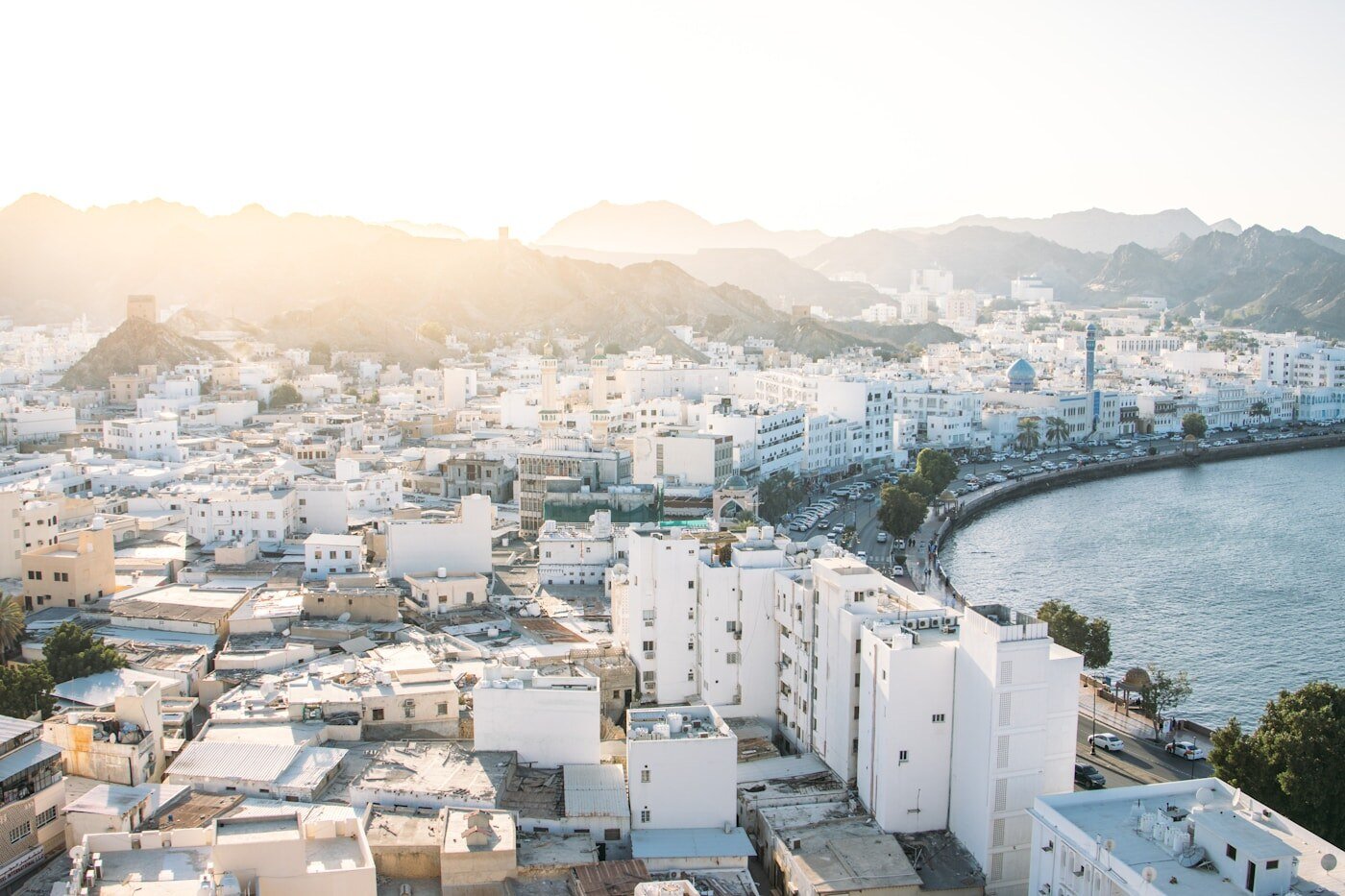
Mutrah is the oldest souq in the country and still smells of frankincense before you reach the door, with lanes of silver, pashminas, kuma caps and traders who will make you coffee while you decide. Outside, the corniche runs along the harbour past the fish market building to the watchtowers on the headland.
Good to know Go after five in the afternoon when the souq reopens and the heat drops, and carry cash and bargain gently. Buy frankincense with a burner and charcoal together, and check the grade before you pay.
Turtles at Ras al Jinz after dark
At Ras al Jinz on the far eastern tip, rangers lead small groups onto the beach at night to watch green turtles haul out, dig and lay, then cover the nest and drag themselves back to the sea. Torches stay red and voices stay low, and the whole thing happens under a sky with no towns in it.
Good to know Visits must be booked in advance through the reserve and run at night and again before dawn. Turtles nest all year with the highest numbers from June to September, and the drive from Muscat is long, so sleep at the reserve or in Sur.