

Things to do
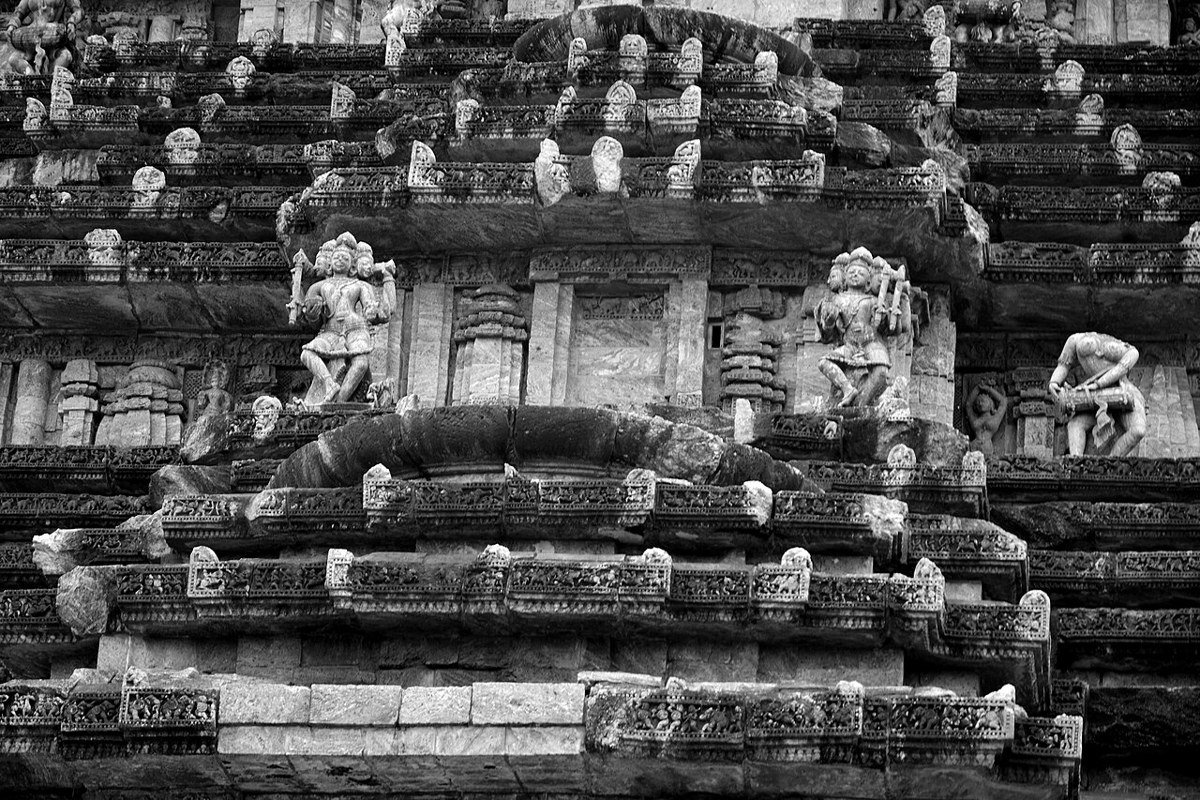
Konark Sun Temple, the great stone chariot
The thirteenth century temple was built as the sun god's chariot with twenty four carved wheels and seven stone horses, and those wheels double as sundials that still tell the time by shadow. The carving runs from musicians and elephants to ordinary daily life, and the site museum fills in what the ruin no longer shows.
Good to know Go in the morning before the stone heats up and take a licensed guide at the gate, because the detail is easy to miss on your own. Allow two hours including the museum.
Puri: the Jagannath temple and the beach
The temple dominates Puri and only Hindus may enter, but the Grand Road, the daily flag change on the spire and the smoke of the mahaprasad kitchens are visible to everyone from the rooftops opposite. At dawn the beach fills with fishing boats coming in and pilgrims bathing before the temple opens.
Good to know Non Hindu visitors get the clearest view from the library roof facing the eastern gate. Leather is not permitted at the temple, so leave belts and bags behind, and dress modestly.
Bhubaneswar temples and the rock cut caves
Lingaraj is the city's great eleventh century temple, best seen from the viewing platform beside it, while Mukteshvara and Rajarani are smaller, quieter and covered in the finest sandstone carving. Across town the Udayagiri and Khandagiri caves were cut for Jain monks in the second century BC and take an easy hour.
Good to know Start with Mukteshvara early, then the caves before the midday heat. Bhubaneswar is about an hour from Puri by road, so temples, caves and the state museum fit into one day.
Chilika Lake dolphins and migratory birds
Chilika is the largest brackish lagoon in Asia, and a boat out of Satapada usually finds Irrawaddy dolphins surfacing near the sea mouth in the early morning. From December the shallows around Nalabana island fill with flamingoes, pelicans and waders that have come down from Central Asia for the winter.
Good to know Book the first boat of the day, as dolphins are far easier to see before the wind gets up. Satapada is about ninety minutes from Puri, and Mangalajodi is the better jetty for serious birdwatching.
Pipili applique and the Raghurajpur artists' village
Pipili on the Puri road is a street of applique workshops where canopies, lampshades and umbrellas are stitched in strong colour for the temple festivals. Raghurajpur is a single lane of painters' houses with murals across every wall, where families still make Pattachitra scrolls on cloth prepared with tamarind seed glue.
Good to know Both sit on the Bhubaneswar to Puri road, so do them as one stop rather than two separate trips. Buy directly from the artist's house at Raghurajpur, and allow an hour to watch a painting take shape.
An evening of Odissi dance and Odia food
Odissi is one of the oldest classical dance forms in India, built out of the poses carved on temple walls, and Bhubaneswar and Puri both hold regular evening recitals at cultural centres and hotels. Follow it with dalma, macha besara and a slab of baked chhena poda, the sweet Odisha is proudest of.
Good to know Ask your hotel which recital is running that week, as the schedule is seasonal rather than daily. Konark hosts a dance festival beside the temple in early December, worth timing a trip around.