

Things to do
Leh: acclimatising, the bazaar and Shanti Stupa
Leh sits at about 3,500 metres, and the first two days are for doing very little: the main bazaar, Leh Palace above it, and the walk or drive up to Shanti Stupa for the sunset over the Indus valley. Headaches are normal at first, altitude sickness is not.
Good to know Give the first 48 hours to Leh with no drives and no stairs in a hurry, and drink far more water than usual. Anyone with a heart or breathing condition should speak to a doctor before booking.
Thiksey and Hemis monasteries
Thiksey rises in white tiers up a hill like a small Potala, and the morning prayers start soon after dawn with horns, drums and butter tea passed down the rows. Hemis, an hour south in a side gorge, is the largest gompa in Ladakh and keeps a museum of thangkas and masks.
Good to know Ask your driver the night before about prayer timings, since they shift with the season. Cover shoulders and knees, walk clockwise around the chortens, and ask before photographing monks or inside the prayer hall.
Nubra Valley over Khardung La
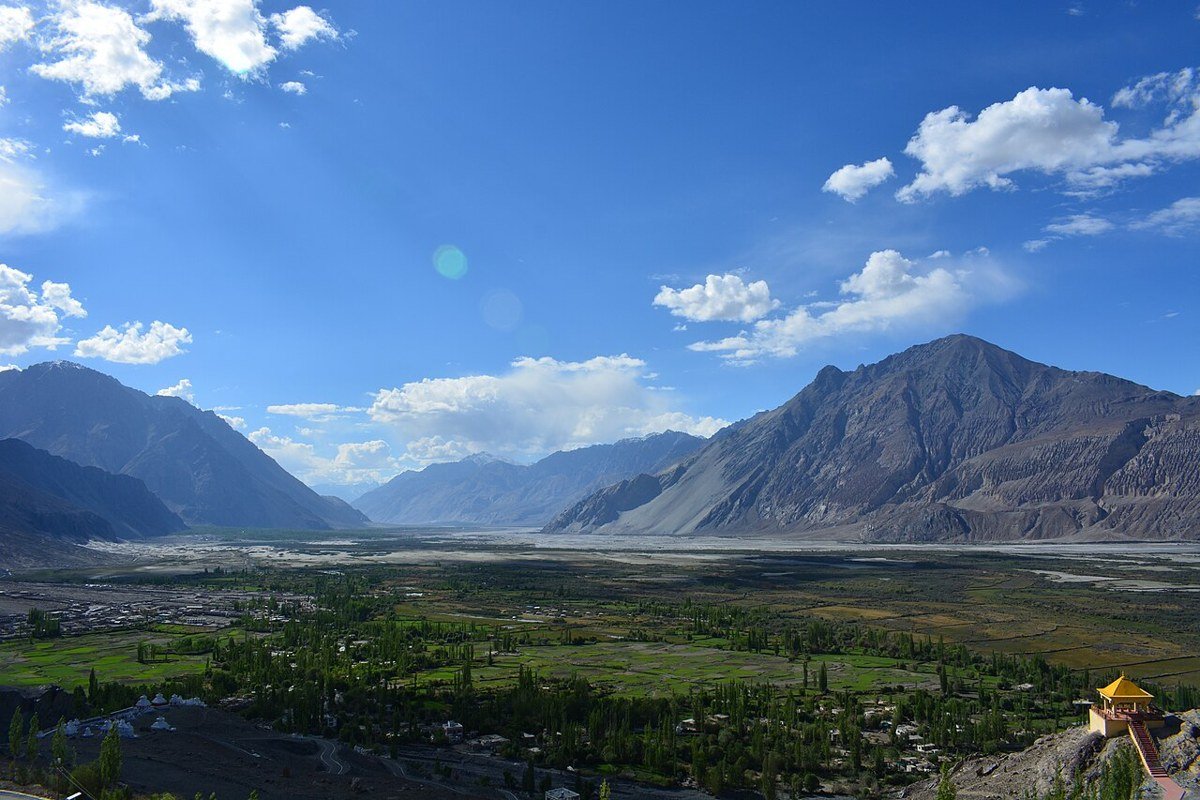
The road climbs over Khardung La, one of the highest motorable passes in the world, then drops into a valley where the Shyok and Nubra rivers meet. At Hunder there are white sand dunes with double humped Bactrian camels on them, and above Diskit a 32 metre Maitreya Buddha looks down the valley.
Good to know Stay one night in Nubra rather than driving both ways in a day. Do not linger at the top of the pass, keep an inner line permit copy for each traveller, and carry cash because cards rarely work beyond Leh.
Pangong Tso and the high lakes
Pangong sits at 4,350 metres and runs east into Tibet, changing from turquoise to deep blue as the light moves, with bare brown ridges on both sides and almost nothing growing. The drive from Leh takes five hours or so over Chang La, and the camps on the shore are basic by design.
Good to know Only add Pangong if you have a spare day and have already acclimatised, and sleep at the lake only if your group is comfortable at altitude. Nights are very cold at any time of year, so pack a warm layer and a torch.
Ladakhi food and the Leh market lanes
Thukpa, momos and skyu, a thick pasta and root vegetable stew, are what people actually eat here, and they suit a cold evening at altitude better than anything rich. The lanes off the main bazaar sell apricots, seabuckthorn juice, pashmina from the Changthang herders and Tibetan style silver work.
Good to know Butter tea is salty, so ask for sweet tea or lemon and ginger if you would rather. Eat light for the first two days, and buy apricots and dried fruit in the main bazaar where the growers sit along the street.
An evening beside the Indus: Shey and Stok
Shey Palace holds a large seated Shakyamuni Buddha in gilded copper and looks over a plain of chortens that catches the last light. Stok Palace across the river is still the royal family's home, with a small museum of crowns, turquoise headdresses and thangkas, and the Stok Kangri wall standing behind it.
Good to know Both are within half an hour of Leh, so they make an easy late afternoon while you are still acclimatising. Take a torch for the dark stairways and something warm, because the temperature falls the moment the sun goes.