

Things to do
North Goa beaches and the Anjuna markets
The strip from Candolim through Baga to Vagator is where Goa is loudest: shacks with plastic chairs pushed down to the waterline, water sports off Baga, and the red cliff at Vagator with Chapora fort above it. Anjuna's flea market runs on Wednesdays and the Arpora night market on Saturdays through the season.
Good to know Stay in Candolim or Ashwem if you want the north without the noise of Baga, and note that the markets are seasonal and thin out after March. Carry cash and bargain hard at the flea market.
South Goa: Palolem, Agonda and the dolphin boats
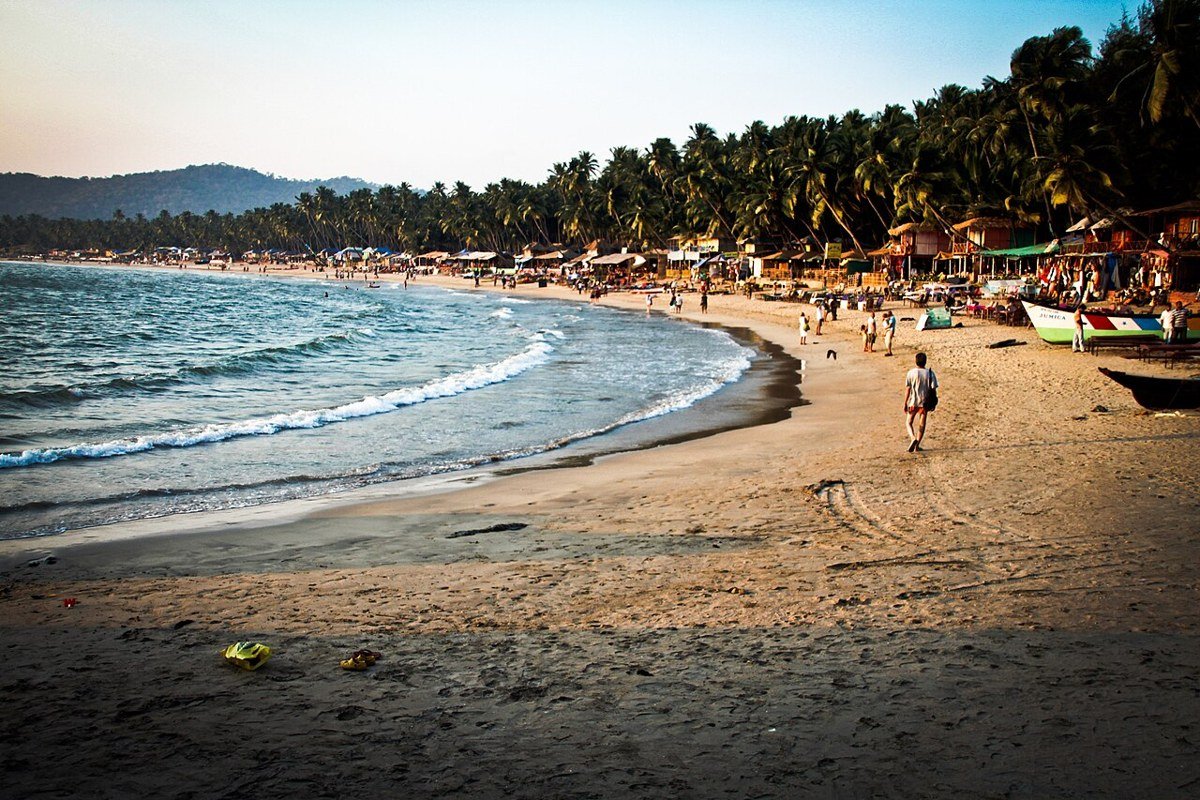
The south is a different holiday: Palolem is a shallow crescent bay where children can wade a long way out, Agonda is quieter still, and Patnem is where people end up staying longer than planned. Small outboard boats leave at first light for dolphins and the short run around to Butterfly beach.
Good to know Dolphin boats go early, roughly six to eight in the morning when the sea is flat, and Palolem suits families while Agonda suits couples. The south is a long drive from the northern beaches, so pick one base rather than commuting.
Old Goa's churches in one morning
The Basilica of Bom Jesus holds the body of St Francis Xavier in a silver casket above a marble tomb, and its laterite facade outside was left deliberately unplastered. Se Cathedral across the lawn is among the largest churches in Asia, with a bell that was once heard across the whole of Old Goa.
Good to know Go before ten, since there is no air conditioning and the crowds build, and keep shoulders and knees covered as at any working church. Two hours covers the Basilica, Se Cathedral and the museum between them.
Fish curry rice and the Margao market
The everyday meal here is fish curry rice: a coconut and kokum gravy with a fried mackerel or kingfish steak alongside, eaten at a plain family run place rather than a beach shack. Margao's covered market sells the real ingredients, dried prawns, Goan sausage strung in loops, and bebinca by the slab.
Good to know Eat fish curry at lunch when the catch is fresh, and ask for a thali rather than ordering dishes separately. Mapusa market on Fridays is the better one for spices and cashews if you are staying north.
Dudhsagar falls and a spice plantation
Dudhsagar drops down a cliff in tiers beside a working railway line, and reaching it means a jeep convoy through the Bhagwan Mahaveer sanctuary followed by a walk over rock. The spice farms on the way back grow vanilla, nutmeg and pepper on the same vines they cook with, and lunch comes on a leaf.
Good to know The falls run hardest from July onwards and the jeep route closes in peak monsoon, so check the season before committing. Jeeps are booked at Kulem and fill early, so start the day early and carry a change of clothes.
Fontainhas at dusk and the Mandovi at night
Panjim's Latin Quarter is a grid of narrow lanes in ochre, blue and green, repainted every year after the rains, with overhanging balconies and the smell of a bakery in the early evening. Down at the river, a sunset cruise on the Mandovi runs with music and dancing on deck and the town lit up behind.
Good to know Walk Fontainhas an hour before sunset, when the light is on the walls and the lanes are quiet, and look for Sao Tome and the chapel of St Sebastian. Cruises run several sailings an evening and the earliest is the calmest.